Most Google Business Profiles are half-finished. A name, an address, maybe a phone number, and then nothing, no real description, five-year-old photos, a Q&A section that’s completely empty. It still shows up on Google. It just doesn’t make anyone pick up the phone.
Here’s the direct answer: a Google Business Profile gets more calls when it removes every reason a customer might hesitate before contacting you, complete and accurate information, real photos that build trust on sight, recent reviews with thoughtful responses, an active posting habit, and features like Q&A and booking links doing the pre-selling for you before the phone ever rings. Google’s own 2026 data shows a fully completed profile performs seven times better than a basic one, for both visibility and customer actions. That gap is almost entirely closeable in an afternoon.
This is the second post in our local visibility series. If you haven’t read why your business might not be showing up on Google at all, start there first, this post assumes your profile is at least claimed and verified, and walks through everything after that.
Key Takeaways
- A fully completed Google Business Profile performs 7 times better than a basic one, in both views and customer actions, completeness alone is the single biggest lever most businesses aren’t pulling.
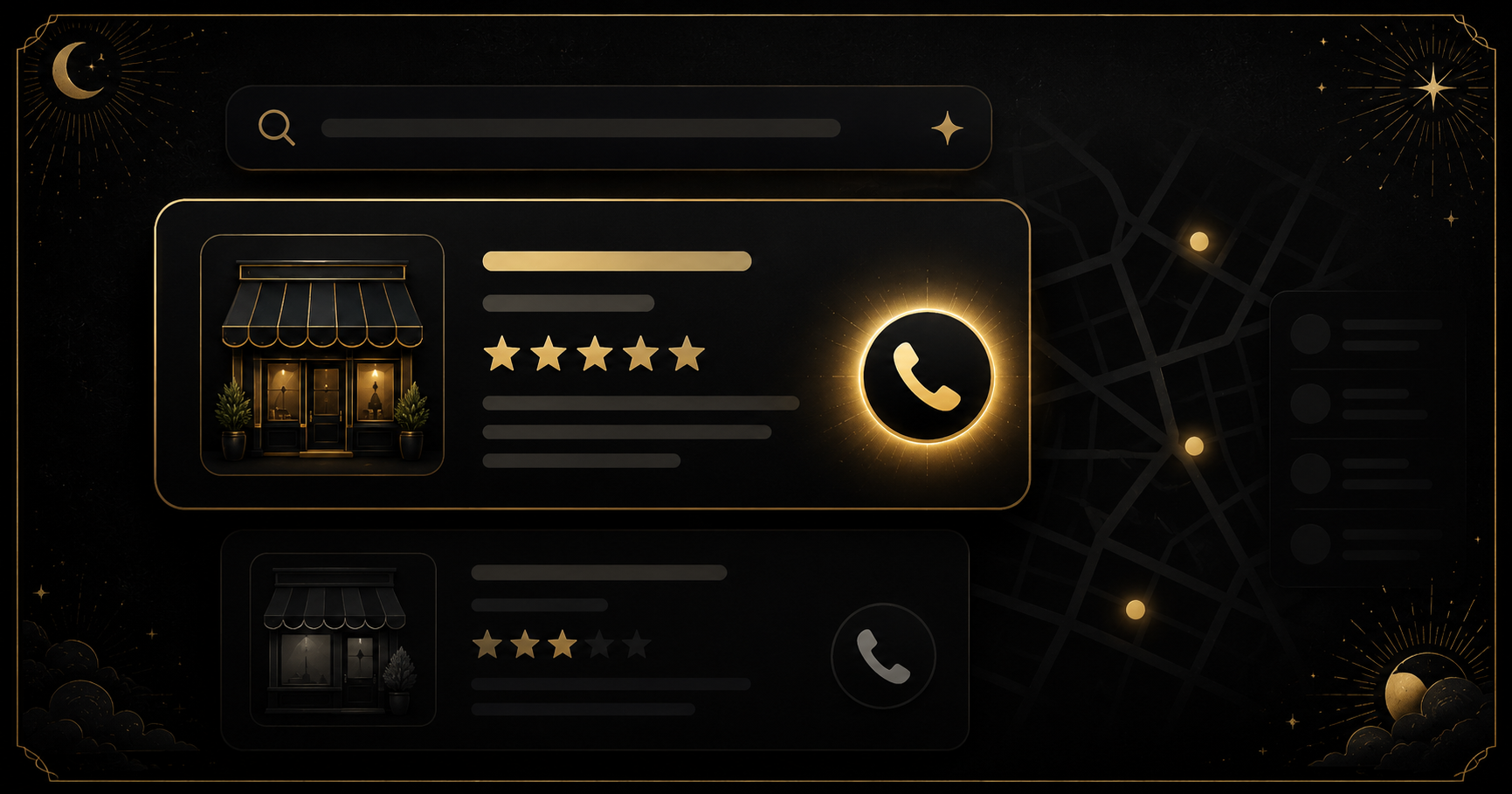
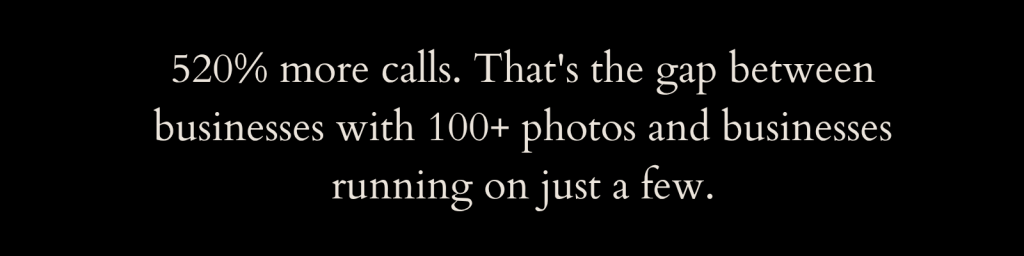
- Photos aren’t decoration. Businesses with 100+ photos get 520% more calls than sparse profiles.
- Posting is a wide-open opportunity: only 17% of businesses use Google Posts, but the ones who post weekly see up to 28% more clicks.
- Choosing the right categories can lift your Local Pack ranking by 25%, this is a five-minute fix most owners never revisit after setup.
- An active Q&A section and booking or messaging links don’t just look helpful, they measurably increase both clicks and calls.

The Problem: A Profile That Exists but Doesn’t Convert
Claiming your Google Business Profile is step one, not the finish line. We see this constantly with new clients: the profile is technically live, technically verified, and technically doing nothing for the business. It’s the equivalent of a storefront with the lights off and a note taped to the door that just says “we’re here.”
The frustrating part is that customers are already standing at that door. They searched, they found you, they clicked into your profile, and then they left without calling, because the profile gave them nothing to act on. No photo of the actual work you do. No recent review to confirm you’re still operating and still good. No answer to the obvious question they had. Every one of those small gaps is a small reason to keep scrolling to the next listing instead.
The Evidence: What Actually Moves Calls and Clicks
The data on this is unusually specific, because Google Business Profile generates its own performance metrics, and researchers have been comparing optimized versus unoptimized profiles at scale.
Completeness is the foundation everything else builds on. According to 2026 Google performance data compiled by Searchlab, a fully optimized Google Business Profile performs 7 times better than a basic profile with just a name and address, a gap that shows up in both how often the profile is seen and how often it converts into an action. Yet more than half of local businesses haven’t even completed basic verification, let alone full optimization, which means most of your competitors are leaving this advantage sitting untouched.
Photos carry more weight than most business owners expect. That same Searchlab data found that businesses with 100 or more photos receive 520% more calls than businesses with minimal photo galleries. Separate research from Birdeye found that verified profiles with 15 or more photos see measurably more interactions than sparse ones, and Google’s own data shows that adding photos increases direction requests by 42% and website clicks by 35%.
Posting frequency is one of the least-used, highest-leverage features on the platform. Searchlab’s research found that only 17% of businesses use Google Posts at all, yet businesses that post weekly see up to 28% more clicks than those who don’t post. A separate 2026 study cited by PagePros found businesses posting two to three times per week saw 34% higher engagement than those posting monthly. This is a rare case in local SEO where the majority of your competition simply isn’t doing the thing that works, which makes it one of the fastest ways to stand out.
Category selection is a quiet but powerful lever. Local SEO research firm Whitespark found that businesses which strategically choose their primary and secondary categories rank an average of 25% higher in the Local Pack than businesses using generic or mismatched categories. This is a setting most business owners choose once, during setup, and never revisit, even as Google adds new, more specific category options over time.
Engagement features close the loop between “found you” and “called you.” Data compiled by SOCi found that businesses which proactively fill in their Q&A section receive 18% more clicks than those who leave it empty, and New Media’s 2026 GBP research found profiles with booking, ordering, or appointment links see 21% more conversion actions, along with a 12% lift in customer action rates for profiles with optimized FAQ or Q&A content.
The Reframe: Your Profile Is a Landing Page, Not a Business Card
The instinct most business owners have is to treat their Google Business Profile like a business card, fill in the required fields once, then forget about it. That instinct is what keeps profiles stuck at a fraction of their potential.
Here’s the shift we walk every client through: your Google Business Profile is a living landing page. It’s often the very first thing a customer sees about your business, before your website, before a single conversation. It needs to do everything a good landing page does, answer the obvious questions, show real proof, and make the next step obvious, except it lives inside Google’s ecosystem instead of your own website, and it updates in near real time.
Once you see it that way, the fixes stop feeling like SEO chores and start feeling like what they actually are: closing the gap between a curious searcher and a paying customer, one field at a time.
The Solution: Treating Your Profile as an Active Asset
The businesses winning local search right now aren’t necessarily better businesses. They’re the ones treating their profile as something to maintain weekly instead of something to set up once. That’s a manageable habit, not a full-time job, most of what moves the needle takes thirty minutes a week once the initial setup is done.
We build this into every local SEO engagement we run: a short, repeatable weekly rhythm, check for new reviews and respond to them, post one update, glance at whether hours or information changed, add a photo if there’s a new one worth sharing. That’s it. It’s the consistency that compounds, not any single dramatic overhaul.
Where to Start: Seven Ways to Turn Your Profile Into a Lead Channel
- Rewrite your business description in plain, human language. Use the full 750 characters if you have something real to say. Describe what you do and who you do it for the way you’d explain it to a neighbor, not the way you’d write ad copy.
- Choose your categories deliberately. Pick the most specific, accurate primary category available, then add every genuinely relevant secondary category. Revisit this list twice a year, since Google regularly adds new options.
- Upload real photos, and keep adding them. Aim past the bare minimum, your storefront or workspace, your team, your actual work or product, and photos taken this year, not five years ago. Skip stock photography; Google’s systems can often identify it, and customers can always tell.
- Turn on Posts and use them weekly. A short update, an offer, a new product, or a seasonal note takes ten minutes and keeps your profile looking active, which both customers and Google reward. Posts expire after a week, so this has to be a habit, not a one-time task.
- Seed your own Q&A section. Don’t wait for customers to ask. Post and answer the five to ten questions you already hear most often, pricing ranges, service areas, appointment availability, whatever comes up in every first phone call.
- Add a booking, ordering, or messaging link if you have one. Even a simple “message us” option removes friction for the customer who isn’t quite ready to call but is ready to reach out.
- Respond to every review, good and bad, within a few days. A thoughtful response to a great review reinforces trust for the next reader. A calm, professional response to a critical one often does more for your credibility than the negative review does damage.
Frequently Asked Questions
How many photos should my Google Business Profile actually have?
There’s no hard ceiling, but the data shows a clear pattern: profiles with 100 or more photos see significantly more calls than sparse ones. Start with 15 to 20 real, current photos covering your location, team, and work, then add a few new ones monthly to keep the profile active.
Do I need to post on Google every single day?
No. Weekly is the sweet spot the research supports, enough to signal an active business without becoming a burden. Two to three posts per week shows even stronger engagement if you have the content and time to sustain it.
What’s the fastest single change I can make this week?
Complete your business description and confirm your categories are accurate. Both take under fifteen minutes, directly affect ranking, and are the most commonly neglected fields on otherwise-decent profiles.
Should I respond to negative reviews, or just ignore them?
Always respond, calmly and professionally, within a few days. Customers reading your profile pay close attention to how you handle criticism, a thoughtful response to a bad review often builds more trust than a page full of five-star ratings with no owner engagement at all.
Can I optimize my Google Business Profile myself, or do I need help?
Most of this is genuinely doable in-house with an hour of setup and thirty minutes a week of maintenance. Where businesses tend to need outside help is sustaining the habit long-term and connecting profile activity to a broader local SEO and content strategy.
The Close
Your Google Business Profile is already doing the hardest part of the job: it’s putting you in front of someone who was actively looking for exactly what you offer, at the exact moment they wanted it. The only question left is whether what they find there gives them a reason to call.
Fill in the gaps, keep it active, and let the profile do what it was actually built to do, turn searches into phone calls, one complete, honest, up-to-date field at a time.
Keep Learning
- Why Isn’t My Local Business Showing Up on Google? The full picture of what controls local visibility, and where to start.
- Do I Need a Custom Website, or Will a Template Work for My Small Business? (publishing soon)
- How Often Should a Small Business Actually Post Content to See Results? (publishing soon)
- What Makes a Customer Choose One Local Business Over Another Just Like It? (publishing soon)
Want us to just handle your Google Business Profile every week? See how our Get Found service works
About the Author
Jamy is co-founder of Rogue Sisters Marketing, where she and Sarah Librada build websites, local SEO strategy, and marketing systems for farmers, restaurants, shops, and service businesses across Eastern Iowa. Rogue Sisters Marketing is the implementation arm of the Rogue Sisters Foundation and operates on the belief that marketing should generate energy for a business, not drain it.